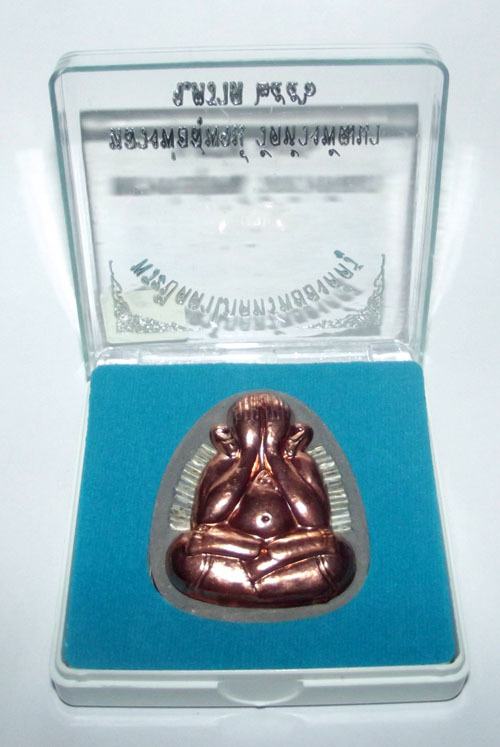
Small, bvut powerful Nirodha BUddha Thai amulet with sacred monk robe, silver Takrut spell, and Hanuman Wicha empowerment, from the Great Petchburi Master of Wicha Hanuman;


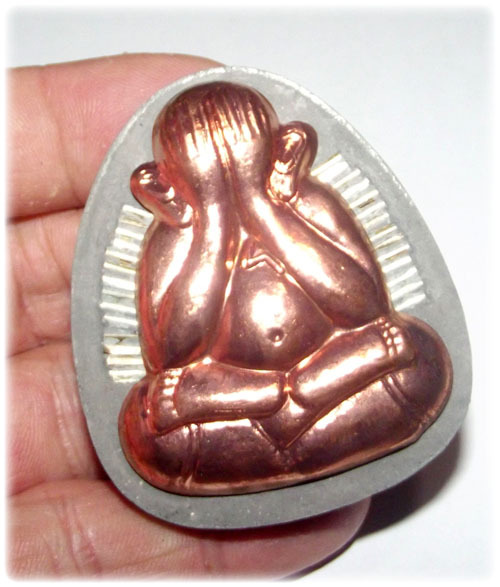
This Pra Pid Ta Pokasap amulet is made from sacred 'pong ban lai' and 'Puttakun' powders. The front face of the amulet features a bronze image of the Buddhist arahant Pra Pid Ta. The enlightened monk is depicted in a meditation posture, with his hands covering his face. As the name already suggests, the amulet focuses its magical power primarily on maha pokasap aspects to accumulate wealth in the form of riches and treasured possessions. The image of Pra Pid Ta, however, also represents loving kindness, mercy and attraction, due to its aura of metta mahaniyom. The authentic Buddhist amulet is made and empowered by Luang Por Supot of Wat Huang Pattana in Khao Saming Trat Province.
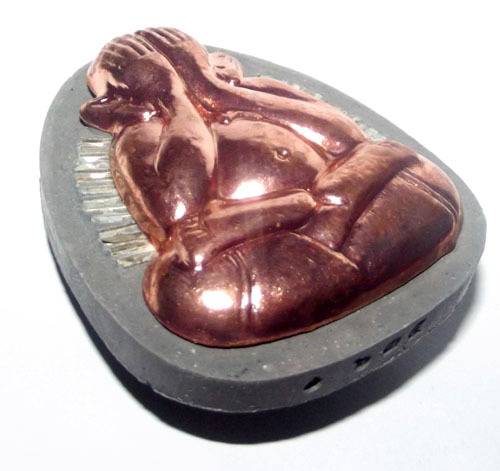
It should be noted, however, that although the emphasis is laid mainly on maha pokasap and maha lap magic, the Pra Pid Ta Pokasap amulets of Luang Por Supot have a much broader range of purposes for which they can be used. In fact, Luang Por Supot also made them to give to his followers a genuine Buddhist amulet that they can use to increase good karma for themselves, and to avoid getting caught up in inauspicious circumstances. In this way, then, one can bucha the amulet to turn bad luck into good luck, so that one will bestowed with the blessings needed to overcome any kind of obstacle.
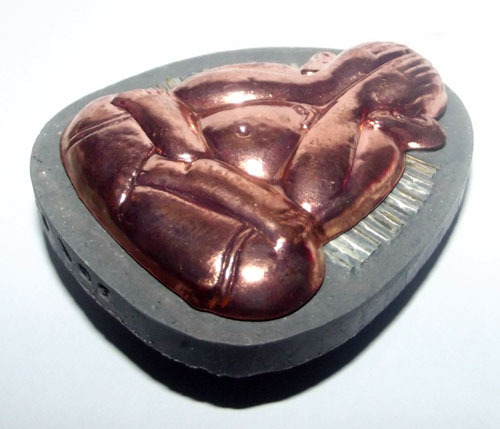
The front face features a bronze image of Pra Pid Ta closing his eyes with both his hands. Also, there are twenty eight solid silver takrut spells inserted on each side of the upperbody of Pra Pid Ta. Then, on the rear side of the amulet, there is a ferocious tiger's face depicted. The bold nature of the tiger symbolizes the magical ability to evade all sorts of danger, which lend the amulet strong maha amnaj powers. And, when examining the surface of the rear face a little closer, it becomes apparent that various kinds of sacred minerals are mixed into the rich pong bai lan powder mixture.
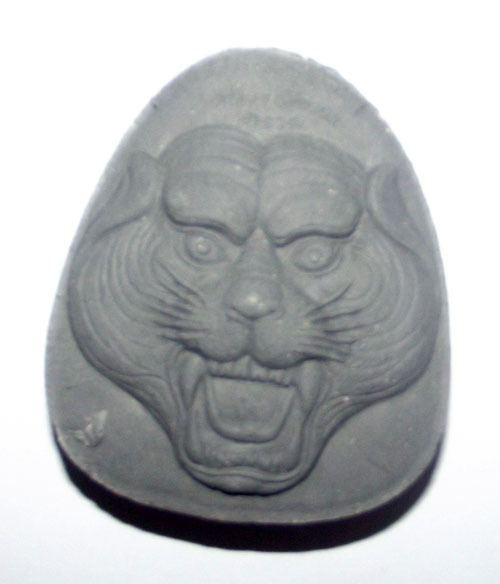
The base of the Pra Pid Ta Pokasap amulet has an official edition number code on it, as can also be seen in the image below.
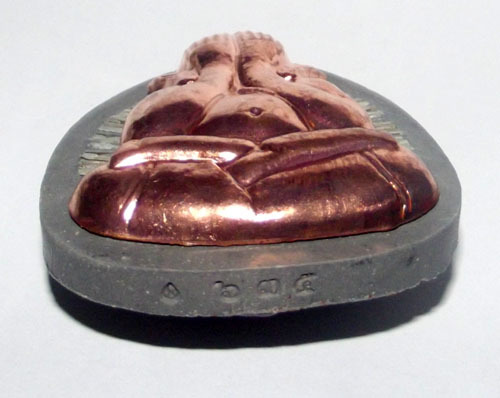
For praying to this amulet, or to ask blessing from this particular Buddhist saint, one should use the kata Pra Pid Ta, or the kata Pra Sangkajjayana.
Kata Pra Sangkajjayana - Pra Pakawambodee
Kata Pra Sangkajjai Maha Lap Buddha
The amulet comes with the original box from the temple. But it can, of course, also be encased, if desired.